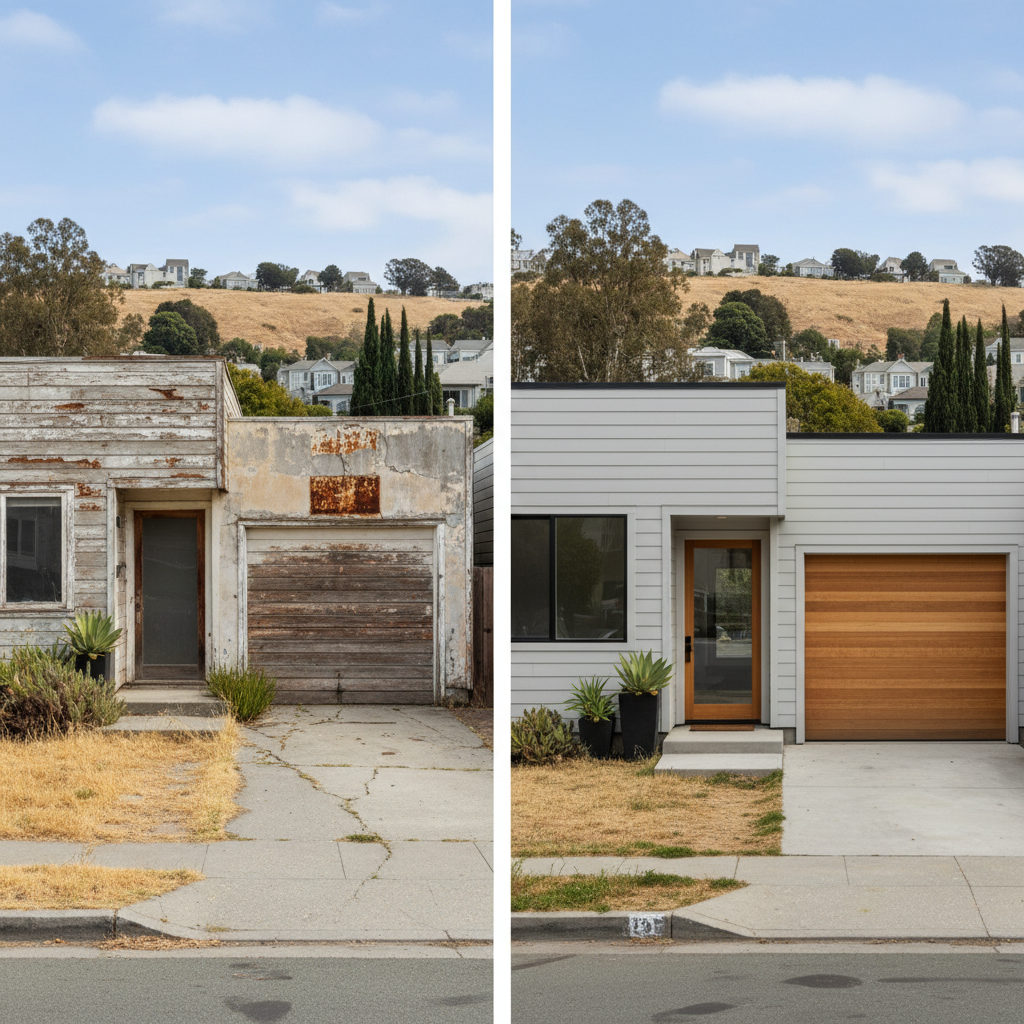
Alright, so you're looking at that dusty old garage and thinking, 'Time to make this space actually useful.' Good for you. A lot of folks in San Francisco are doing the same thing, whether it's for an ADU, an office, or just a better laundry room. When you get serious about converting that garage, one of the first big decisions you'll face is what to do with the floor. You've basically got two main routes: pouring a new concrete slab or building a raised wood floor. I've seen both done, and trust me, there are pros and cons to each that you really need to understand before you start.
The New Concrete Slab: Solid, But Is It Smart?
Most garages in SF already have a concrete slab, right? So, the idea of just pouring a new, level one on top or replacing the old one seems pretty straightforward. And in some ways, it is. A new slab is incredibly durable. You pour it, it cures, and it's practically bulletproof. You can park a car on it, drop heavy tools, whatever. It's not going to rot, and termites aren't interested in it.
But here's where it gets tricky, especially in San Francisco. Our soil conditions can be… interesting. We've got areas with a lot of clay, areas near the bay with high water tables, and let's not forget those hills. If you're pouring a new slab, you've got to be absolutely sure about your drainage and vapor barrier. If you don't do it right, you're going to have moisture issues. I've seen too many 'finished' garage conversions where the homeowner is fighting mildew or their new flooring is buckling because moisture is wicking up through the slab. It's a real headache to fix after the fact.
Cost-wise, a new slab can be deceptively expensive. You might think it's just concrete, but there's demolition of the old slab (if needed), proper grading, compacting, rebar, vapor barriers, and then the pour itself. Plus, if your existing slab is really uneven or cracked, you might need significant prep work. Maintenance is low once it's in, but getting it right upfront is crucial. Appearance-wise, it's a blank canvas; you can put almost any flooring on top, but the slab itself isn't exactly 'cozy.'
The Raised Wood Floor: More Work, More Comfort?
Now, let's talk about a raised wood floor. This is where you build a subfloor system over your existing slab, usually with sleepers (wood joists) and then plywood or OSB on top. This creates an air gap between the old concrete and your new finished floor. This air gap is a game-changer for a few reasons.
First, moisture. That air gap acts as a buffer. Even if your old slab has some moisture issues, that air circulation helps mitigate it, protecting your new finished floor. You still need a good vapor barrier on the concrete, but the raised floor adds an extra layer of protection. Second, insulation. You can easily add insulation between those sleepers, making the room much warmer and more comfortable. This is a big deal in San Francisco, where those cold, damp mornings can really seep into a concrete floor. A raised, insulated floor makes a huge difference in comfort and energy efficiency, especially if you're trying to meet Title 24 requirements for an ADU.
Durability? A properly built raised floor is plenty durable for living space. You're not parking a car on it anymore. Maintenance is similar to any interior floor – keep it clean, fix spills. The initial cost might seem higher because you're building a whole new structure, but it often balances out when you consider the long-term benefits of comfort and avoiding moisture problems. Appearance-wise, it feels like a 'real' room from the start, and you have all the same flooring options as a slab.
My Recommendation for San Francisco Homeowners
Look, if you're converting your garage into a habitable space – an ADU, an office, a bedroom – I almost always lean towards a raised wood floor. Especially here in San Francisco. The benefits of insulation, moisture control, and overall comfort just outweigh the perceived simplicity of a new concrete slab.
Think about it: you're investing a lot of money to make this space livable. Do you want it to feel cold and damp, or warm and inviting? That air gap and insulation make a massive difference. Plus, if you ever need to run new electrical or plumbing lines under the floor in the future, it's a lot easier to do with a raised floor than trying to cut into concrete.
Now, if you're just doing a very basic storage area or a workshop where you don't care about comfort and aren't worried about moisture, a new slab might be fine. But for anything you're going to spend real time in, especially if it's going to be a rental unit or an extension of your home, go with the raised floor. It's a smarter, more comfortable, and often more resilient choice for our specific climate and soil conditions. We've helped plenty of folks at San Francisco ADU Solutions make this exact decision, and they're always happier with the results of a well-built raised floor.